




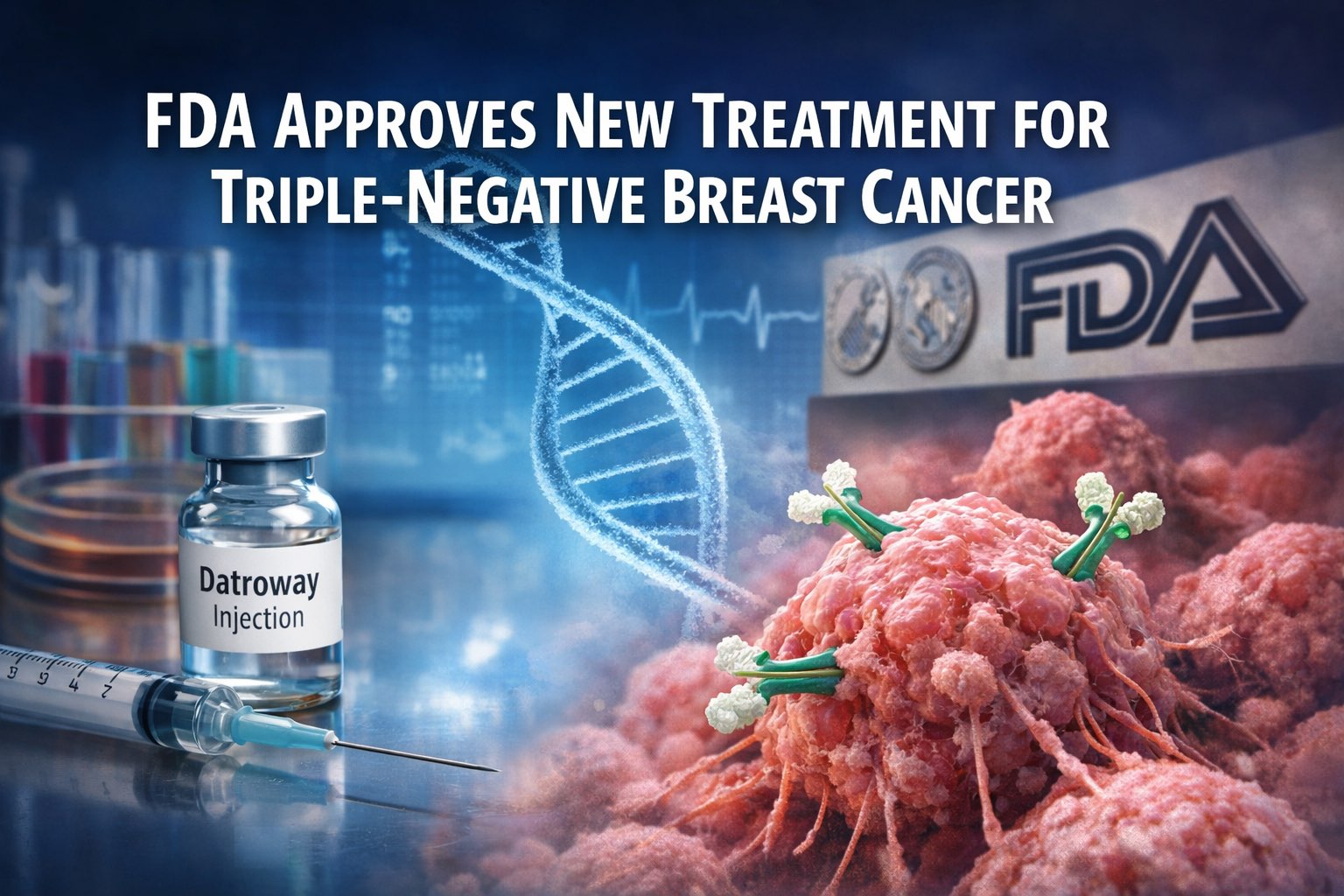
Triple‑negative breast cancer, often shortened to TNBC, has long been one of the most challenging forms of breast cancer to treat. Unlike other breast cancer types, TNBC does not have the three common receptors that many modern treatments target. This means patients have historically had fewer options, and many have had to rely on chemotherapy alone. But a major shift is now underway. The U.S. Food and Drug Administration (FDA) has approved Datroway, a new antibody‑drug conjugate (ADC), for adults with advanced or metastatic TNBC who cannot receive PD‑1 or PD‑L1 immunotherapy. This approval marks a significant step forward for patients who urgently need more effective and longer lasting treatment options.
What Is Datroway?
Datroway, known scientifically as datopotamab deruxtecan, is a type of targeted cancer therapy called an antibody‑drug conjugate. Think of it as a smart delivery system. The antibody portion of the drug seeks out a specific protein on cancer cells called TROP2. Once it finds those cells, it delivers a chemotherapy‑like payload directly into them. This targeted approach aims to kill cancer cells more effectively while reducing damage to healthy cells.
Datroway is the first TROP2‑directed ADC approved for first‑line treatment of metastatic TNBC in patients who are not candidates for PD‑1 or PD‑L1 inhibitor therapy.
Why TNBC Is So Difficult to Treat
TNBC accounts for about 15 percent of all breast cancer diagnoses and tends to affect younger women, including a higher proportion of Black and Hispanic women. Unlike other breast cancers, TNBC does not respond to hormone therapies or HER2‑targeted drugs because it lacks the receptors those treatments rely on. This leaves chemotherapy as the primary option for many patients.
In the metastatic setting, where the cancer has spread beyond the breast, survival rates have historically been limited. Median overall survival with traditional chemotherapy has ranged from 12 to 18 months, and only about 15 percent of patients survive five years after diagnosis.
Because of these challenges, new treatments that can extend survival and control disease more effectively are urgently needed.
What the Clinical Trials Showed
The FDA approval of Datroway is based on results from the large Phase III TROPION‑Breast02 clinical trial. This study compared Datroway with standard chemotherapy in patients with metastatic TNBC who were not eligible for PD‑1 or PD‑L1 immunotherapy.
Here are the key findings:
1. Improved Overall Survival
Datroway extended median overall survival by approximately five months compared with chemotherapy. Patients receiving Datroway lived a median of 23.7 months, compared with 18.7 months for those receiving chemotherapy.
This is the first time any ADC has shown a two‑year median overall survival in first‑line metastatic TNBC.
2. Reduced Risk of Disease Progression or Death
The trial showed a 43 percent reduction in the risk of disease progression or death compared with chemotherapy.
3. Higher Tumor Response Rates
Datroway achieved an objective response rate of 64 percent, compared with 30 percent for chemotherapy. This means more patients saw their tumors shrink or stabilize.
4. Longer Progression‑Free Survival
Patients receiving Datroway had a median progression‑free survival of 10.8 months, compared with 5.6 months for chemotherapy.
5. Safety Profile
The safety profile of Datroway was consistent with earlier trials. Common side effects included low‑grade nausea, hair loss, and mouth sores. Some patients experienced more serious side effects, such as inflammation in the lungs or eyes, which require monitoring.
Overall, the trial results show that Datroway not only helps patients live longer but also offers more durable control of their disease.
Why This Approval Matters
For many patients with metastatic TNBC, treatment options have been limited and often ineffective in the long term. Datroway changes that landscape in several important ways:
A New Standard of Care
Experts believe Datroway has the potential to become a new standard of care for patients who cannot receive immunotherapy. It is the first treatment in this setting to show a meaningful survival advantage over chemotherapy.
A Targeted Approach
Because Datroway targets TROP2, a protein commonly found on TNBC cells, it delivers treatment more precisely. This targeted approach may help reduce some of the collateral damage associated with traditional chemotherapy.
Benefits for a Broad Patient Population
Approximately 70 percent of metastatic TNBC patients are not eligible for PD‑1 or PD‑L1 immunotherapy. Datroway offers a new option for this large group of patients who previously had few alternatives.
Global Impact
The FDA approval was part of Project Orbis, a program that allows for simultaneous review by health authorities in multiple countries. Reviews are ongoing in regions including Japan, China, and the European Union, meaning Datroway may soon become available to patients worldwide.
How Datroway Is Given
Datroway is administered through an intravenous infusion once every three weeks. Treatment continues until the cancer progresses or side effects become too severe. This schedule is similar to many other cancer treatments and allows doctors to monitor patients regularly.
What Patients Should Know
If you or a loved one has been diagnosed with metastatic TNBC, here are some key points to keep in mind:
1. Ask About Eligibility
Datroway is approved for adults with unresectable or metastatic TNBC who are not candidates for PD‑1 or PD‑L1 inhibitor therapy. Your oncologist can determine whether you fall into this category.
2. Understand the Benefits
Clinical trials show that Datroway can extend survival, delay disease progression, and shrink tumors more effectively than chemotherapy in many patients.
3. Be Aware of Side Effects
Like all cancer treatments, Datroway comes with potential side effects. Some are mild, while others require close monitoring. Discuss these risks with your care team.
4. Consider the Broader Treatment Plan
Datroway may be used as a first‑line treatment, meaning it is given before other therapies. Your doctor will help you understand how it fits into your overall treatment strategy.
The Future of TNBC Treatment
The approval of Datroway represents more than just a new drug. It signals a shift toward more personalized and targeted treatments for TNBC. Researchers are continuing to study Datroway in other settings, including earlier stages of breast cancer and in combination with other therapies.
As more data emerges, Datroway may become part of a broader toolkit for treating TNBC across different stages and patient groups. For now, it offers new hope to patients who have long faced limited options.
The FDA approval of Datroway marks a major milestone in the treatment of advanced triple‑negative breast cancer. With strong clinical trial results showing improved survival, better tumor response, and a manageable safety profile, Datroway provides a much needed new option for patients who previously had few effective treatments available.
For patients, families, and caregivers navigating the challenges of TNBC, this approval brings renewed optimism and a meaningful step forward in the fight against this aggressive disease.
Better Treatment, Lower Cost – No Catch.
Find safer, more effective medications with fewer side effects – often for less money. It’s fast, free, and personalized. Learn More →
Sources (3)
- AstraZeneca and Daiichi Sankyo’s Datroway receives FDA approval for TNBC
https://www.astrazeneca.com/media-centre/press-releases/2026/datroway-approved-in-us-for-1l-triple-negative-bc.html - FDA Approves Datroway for Patients with Metastatic Triple‑Negative Breast Cancer Who Are Not PD‑1/PD‑L1 Inhibitor Candidates
https://www.pharmexec.com/view/fda-approves-datroway-metastatic-triple-negative-breast-cancer-pd-1-pd-l1-inhibitor-candidates
- FDA Drug Trials Snapshot: Datroway
https://www.fda.gov/drugs/drug-approvals-and-databases/drug-trials-snapshots-datroway