




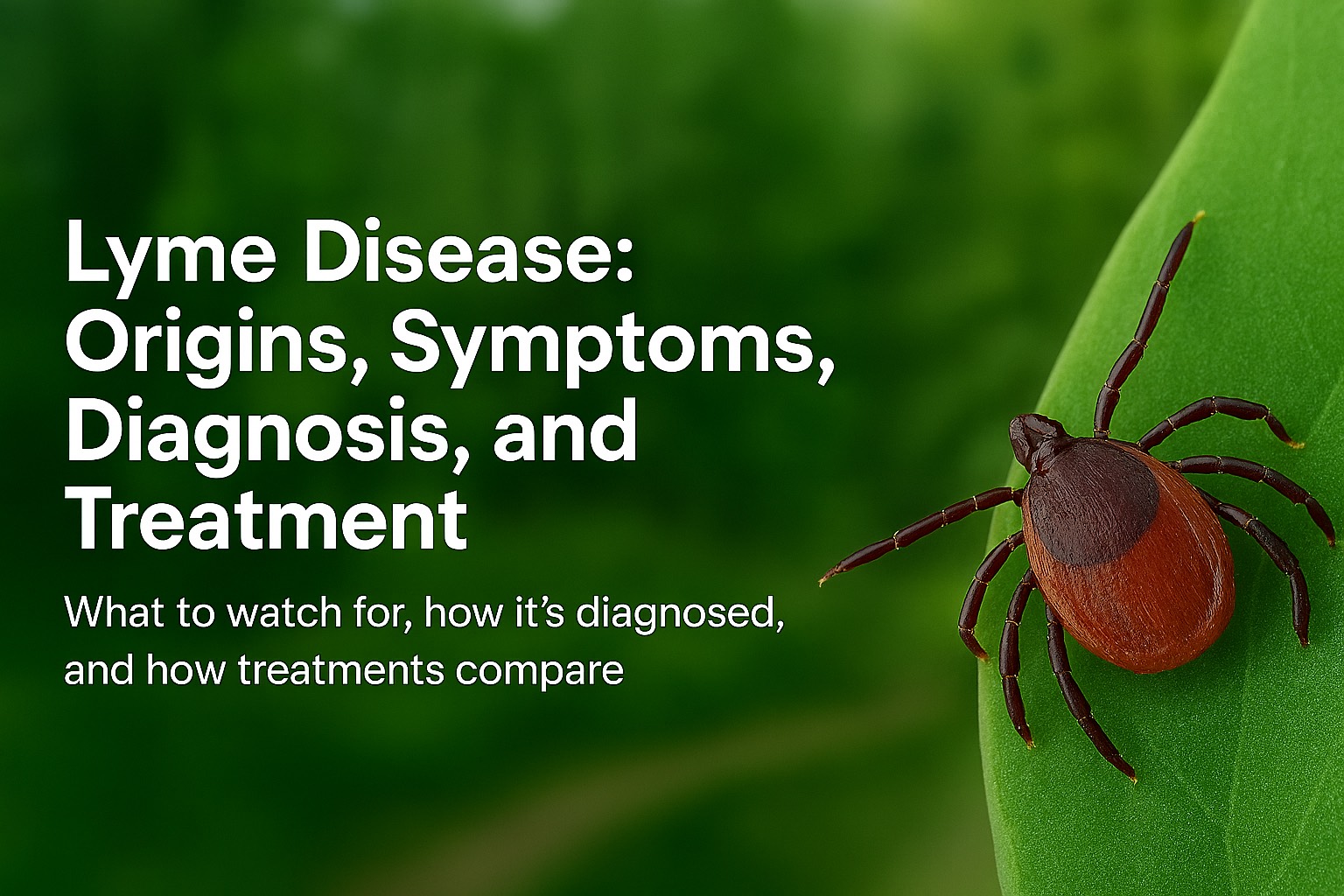
Lyme disease is a bacterial infection spread by ticks. It can start with a rash and flu-like symptoms, and if not treated, it can affect joints, the heart, and the nervous system. This short guide covers the origin of Lyme disease, common signs to watch for, how doctors diagnose it, and the medicines used to treat it – with a clear comparison so you can understand the differences between options.
A short history of Lyme disease
Lyme disease was first recognized in the mid-1970s after an unusual cluster of arthritis cases in and around Lyme, Connecticut. Local doctors and public health officials investigated and, over the next decade, researchers identified the blacklegged (deer) tick as the carrier and the bacterium Borrelia burgdorferi as the cause. Since then, Lyme has become the most common vector-borne disease in the United States and is now reported across many parts of the country.
How people get infected
The bacteria that cause Lyme disease live in small mammals and birds and are carried by blacklegged ticks (genus Ixodes). People usually get infected when an infected tick attaches and feeds for a long enough time – transmission is unlikely if the tick was attached for less than about 24-36 hours. Ticks are most active in spring and summer, but risk exists whenever temperatures allow ticks to be active.
Common signs and symptoms
Symptoms vary by stage and person, but the typical progression looks like this:
- Early localized (days to weeks after a bite): Flu-like symptoms – fever, chills, headache, fatigue, muscle and joint aches – and often a skin rash called erythema migrans (EM). The EM rash appears in about 70–80% of cases and can expand over days to form a round or oval red patch; sometimes it looks like a “bull’s-eye.”
- Early disseminated (weeks to months): Multiple rashes, facial palsy (Bell’s palsy), heart palpitations or dizziness from Lyme carditis, and nerve pain.
- Late stage (months to years if untreated): Recurrent large-joint arthritis (often the knee), chronic nerve pain, and cognitive difficulties in some people.
Not everyone gets the classic rash, and symptoms can mimic other illnesses, which is why awareness of recent tick exposure and local risk is important.
How doctors diagnose Lyme disease
Diagnosis is a mix of clinical judgment and testing:
- If you have a classic EM rash: Many clinicians treat immediately without waiting for blood tests because the rash is considered diagnostic.
- If no rash or unclear symptoms: Doctors consider your symptoms, whether you were in a tick area, and then use a two-step blood testing approach recommended by public health authorities. The standard is an initial ELISA (or similar) test followed by a Western blot if the first test is positive or equivocal. These tests detect antibodies your body makes against the bacteria, so they may be negative early on (before antibodies form).
Testing asymptomatic people after a tick bite is generally not recommended. Instead, clinicians watch for symptoms and test if they appear.
Treatment overview
Lyme disease is treated with antibiotics. Most people treated early recover quickly and completely. The choice of antibiotic, dose, and duration depends on age, pregnancy status, symptoms, and whether the infection involves the nervous system, heart, or joints. Commonly used antibiotics include doxycycline, amoxicillin, and cefuroxime axetil for oral therapy; ceftriaxone is commonly used intravenously for more severe neurologic or cardiac disease.
Below is a practical comparison of the most commonly used medications.
Medication comparison table
| Medication | Typical adult dose | Usual duration | When used | Pros | Cons / side effects |
| Doxycycline | 100 mg twice daily | 10–21 days (commonly 10–14) | First-line for many adults with early Lyme and for prophylaxis after a high-risk tick bite | Effective; also treats some co-infections like anaplasmosis; oral. | Not for young children under 8 or pregnant people; photosensitivity; GI upset. |
| Amoxicillin | 500 mg three times daily or 500–1000 mg three times daily | 14–21 days | Alternative for children, pregnant people, or those who cannot take doxycycline | Safe in pregnancy and young children; well tolerated. | May cause GI upset; not effective against some co-infections. |
| Cefuroxime axetil | 500 mg twice daily | 14–21 days | Alternative oral option for those who cannot take doxycycline | Oral option for penicillin-allergic patients who can take cephalosporins. | GI upset; possible allergic reactions in penicillin-allergic people. |
| Azithromycin | 500 mg once daily | 7–10 days | Alternative when doxycycline and beta-lactams are contraindicated | Short course; once-daily dosing. | Less effective than first-line drugs; not preferred unless necessary. |
| Ceftriaxone (IV) | 2 g once daily (varies) | 14–28 days depending on severity | Severe neurologic Lyme, Lyme meningitis, or severe carditis | Penetrates CNS; used for serious disease. | Requires IV access; risk of line infections; cost and hospitalization or outpatient infusion. |
Key sources for these recommendations include the Centers for Disease Control and Prevention and the joint IDSA/AAN/ACR clinical practice guideline.
How doctors pick one medicine over another
- Age and pregnancy: Doxycycline is usually avoided in young children and pregnant people; amoxicillin or cefuroxime are preferred in those groups.
- Type of illness: For simple early Lyme (rash, mild systemic symptoms), oral antibiotics like doxycycline, amoxicillin, or cefuroxime are standard. For neurologic involvement (e.g., meningitis) or severe heart block from Lyme carditis, IV ceftriaxone is often used.
- Co-infections: Doxycycline covers some other tick-borne infections (like anaplasmosis), so clinicians may favor it when co-infection is possible.
What to expect during treatment
Most people start to feel better within days to weeks of starting antibiotics. If symptoms persist after a standard course, doctors will reassess to rule out other causes, check for objective signs of ongoing infection (like swollen joints), and consider whether additional evaluation or specialist care is needed. Long-term antibiotic therapy for persistent, non-specific symptoms is not routinely recommended because evidence does not show consistent benefit and prolonged antibiotics carry risks.
Side effects and safety notes
- Doxycycline: Sun sensitivity (use sunscreen and protective clothing), possible GI upset, and not recommended for young children or pregnancy.
- Beta-lactams (amoxicillin, cefuroxime): Generally well tolerated; watch for allergic reactions.
- IV antibiotics: Require monitoring for IV-line complications and other risks.
If you develop a high fever, severe headache, or other worrying symptoms while on antibiotics, contact your clinician – sometimes co-infections or treatment reactions need attention.
Preventing Lyme disease
Prevention focuses on avoiding tick bites: use EPA-registered repellents (DEET, picaridin, oil of lemon eucalyptus), wear long clothing and tuck pants into socks, treat clothing with permethrin, do thorough tick checks after outdoor activity, and remove ticks promptly with fine-tipped tweezers. In certain high-risk situations, a single dose of doxycycline given within 72 hours of tick removal can be used as prophylaxis – but only when specific criteria are met (e.g., tick is an Ixodes species, attached ≥36 hours, and local Lyme prevalence is high).
When to see a doctor
- You find a tick that has likely been attached to your skin for more than a day and you live in or visited a Lyme-endemic area.
- You develop a spreading rash, fever, new facial droop, joint swelling, or unexplained neurologic or cardiac symptoms after possible tick exposure.
Bring the tick (if you saved it) or a photo, and be ready to describe when and where you were exposed. Early treatment is simpler and more effective than treating late complications.
A note about persistent symptoms
Some people report ongoing fatigue, pain, or cognitive complaints after treatment. Research is ongoing to understand why this happens. Current major medical organizations recommend careful evaluation for other causes and symptom management; routine long-term antibiotics are not supported by high-quality evidence and can be harmful. If symptoms persist, ask your clinician for a thorough re-evaluation and, if needed, referral to specialists who treat post-infectious or chronic symptoms.
Quick practical checklist
- After outdoor activity: Check your body and clothing for ticks.
- If you find a tick: Remove it promptly with fine-tipped tweezers; save it if possible.
- If you see a spreading rash or new symptoms: Contact your healthcare provider promptly.
- If prescribed antibiotics: Take the full course as directed and report side effects.
Sources (9)
Below are the primary sources used for this article. Each link was checked to point to the relevant page at the time this post was prepared.
- CDC Prevention Lyme Disease Overview
https://www.cdc.gov/lyme/index.html - CDC Signs and Symptoms of Untreated Lyme Disease.
- CDC Treatment and Intervention for Lyme Disease.
https://www.cdc.gov/lyme/treatment/index.html - IDSA AAN ACR 2020 Clinical Practice Guideline for Lyme Disease.
https://www.idsociety.org/practice-guideline/lyme-disease/ - Mayo Clinic Lyme Disease Diagnosis and Treatment.
https://www.mayoclinic.org/diseases-conditions/lyme-disease/diagnosis-treatment/drc-20374655 - Cleveland Clinic Lyme Disease Overview and Treatment.
https://my.clevelandclinic.org/health/diseases/11586-lyme-disease - A Brief History of Lyme Disease in Connecticut Department of Public Health.
https://portal.ct.gov/DPH/Epidemiology-and-Emerging-Infections/A-Brief-History-of-Lyme-Disease-in-Connecticut - Harvard Health Lyme Disease Diagnosis and Testing.
https://www.lyme.health.harvard.edu/diagnosis-and-testing/ - HHS Invisible Illness Lyme Disease Overview.
https://www.hhs.gov/lyme/index.html