




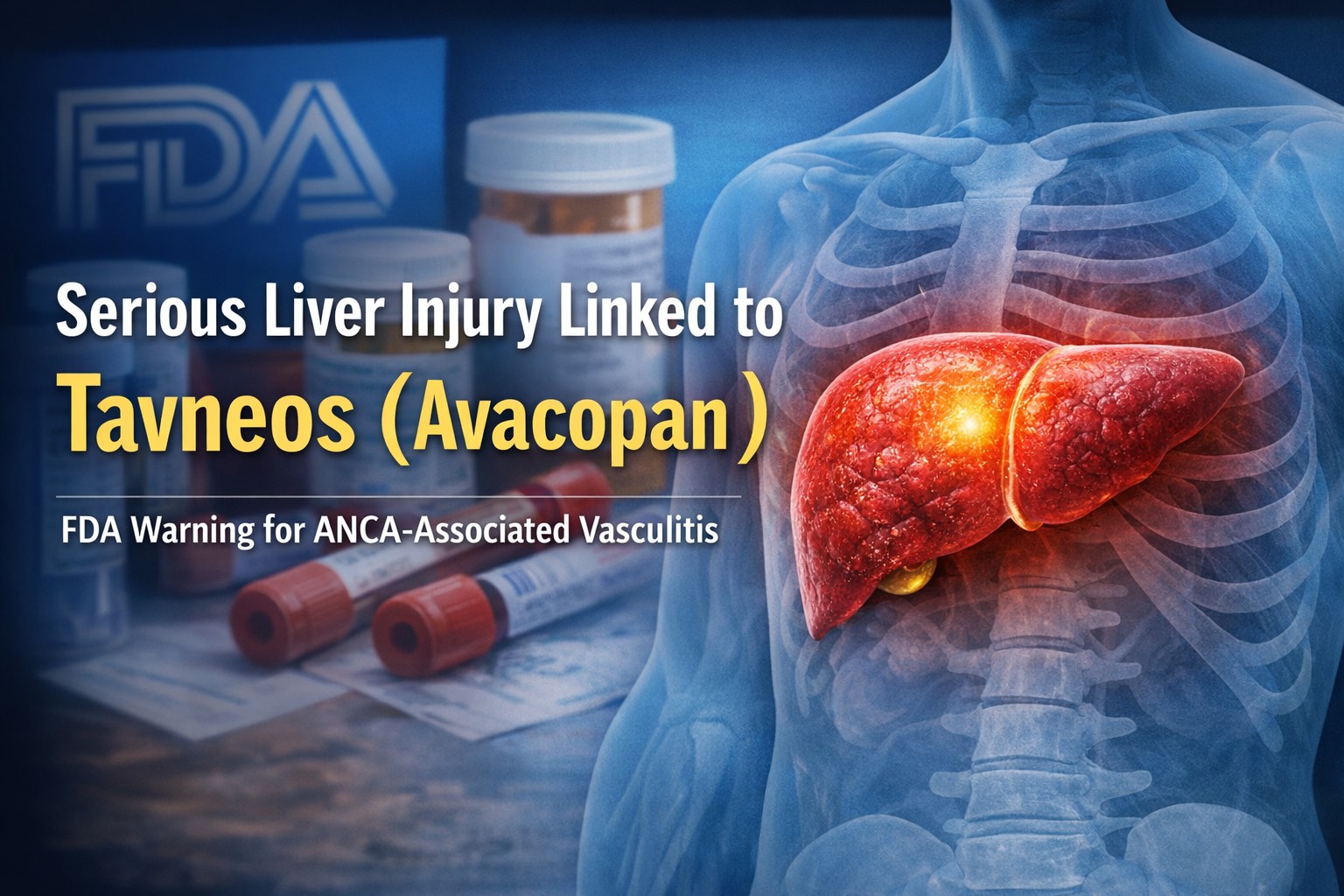
Tavneos (avacopan) is a prescription medication approved in 2021 to help treat severe active anti‑neutrophil cytoplasmic autoantibody (ANCA)‑associated vasculitis, a rare autoimmune disease that causes inflammation of small blood vessels. For many patients, Tavneos offered a new option to control a difficult and potentially life‑threatening condition.
Now, the U.S. Food and Drug Administration (FDA) says new safety data has raised serious concerns about the drug’s impact on the liver.
In a recent safety bulletin, the FDA reported 76 cases of drug‑induced liver injury in people taking Tavneos. Of those cases, 74 were considered serious, and eight patients died. The agency says the pattern and severity of these cases go beyond what was previously known about the drug’s risks.
What the FDA Found
The FDA’s review looked at post‑marketing safety reports submitted through October 9, 2024. These reports came from healthcare providers and regulators around the world after Tavneos was already on the market.
Key findings from the FDA include:
- 76 total cases of liver injury linked to Tavneos
- 8 deaths associated with liver failure or complications
- Median time to onset: 46 days, meaning liver problems often appeared within the first two months of treatment
- 7 cases of biopsy‑confirmed vanishing bile duct syndrome (VBDS), a rare and severe condition that can lead to permanent liver damage or death
Three of the VBDS cases were fatal, underscoring how serious these injuries can be.
Why Vanishing Bile Duct Syndrome Matters
Vanishing bile duct syndrome is not a routine liver side effect. It occurs when the small bile ducts inside the liver are progressively destroyed, preventing bile from flowing properly. Over time, this can cause chronic liver failure, the need for a transplant, or death.
The FDA says the appearance of VBDS in multiple Tavneos cases represents a new and particularly concerning safety signal that was not fully understood at the time of the drug’s approval.
Where the Reports Came From
Most of the reported cases, 66 out of 76 came from Japan, with additional cases reported in the United States, Europe, and Canada. The FDA notes that geographic clustering does not rule out risk elsewhere and may reflect differences in reporting practices rather than differences in safety.
Symptoms Patients Should Watch For
The FDA urges patients taking Tavneos to seek medical care immediately if they notice signs of liver trouble, including:
- Yellowing of the skin or eyes
- Dark urine or pale stools
- Persistent itching
- Severe fatigue
- Nausea, vomiting, or abdominal pain
These symptoms can signal liver injury and should never be ignored.
What the FDA Is Recommending Now
To reduce risk, the FDA recommends:
- Frequent liver blood tests, especially early in treatment
- Immediate discontinuation of Tavneos if liver injury is suspected
- Careful weighing of benefits versus risks before starting therapy
The agency also asked the drug’s manufacturer to voluntarily withdraw Tavneos from the U.S. market. As of the bulletin’s release, the company had not agreed to withdraw the drug.
Why This Matters for Patients
ANCA‑associated vasculitis is a serious disease, and treatment decisions are often complex. The FDA’s findings do not mean Tavneos is unsafe for everyone – but they do mean the risks are higher and more severe than previously understood.
For patients currently taking Tavneos, the message is not panic, but awareness and vigilance. For those considering it, the decision should involve a careful discussion with a healthcare provider about alternatives, monitoring, and individual risk factors.
Source
FDA Drug Safety Communication:
https://www.fda.gov/drugs/drug-safety-and-availability/fda-identifies-cases-serious-liver-injury-patients-taking-tavneos-avacopan-severe-active-anti