




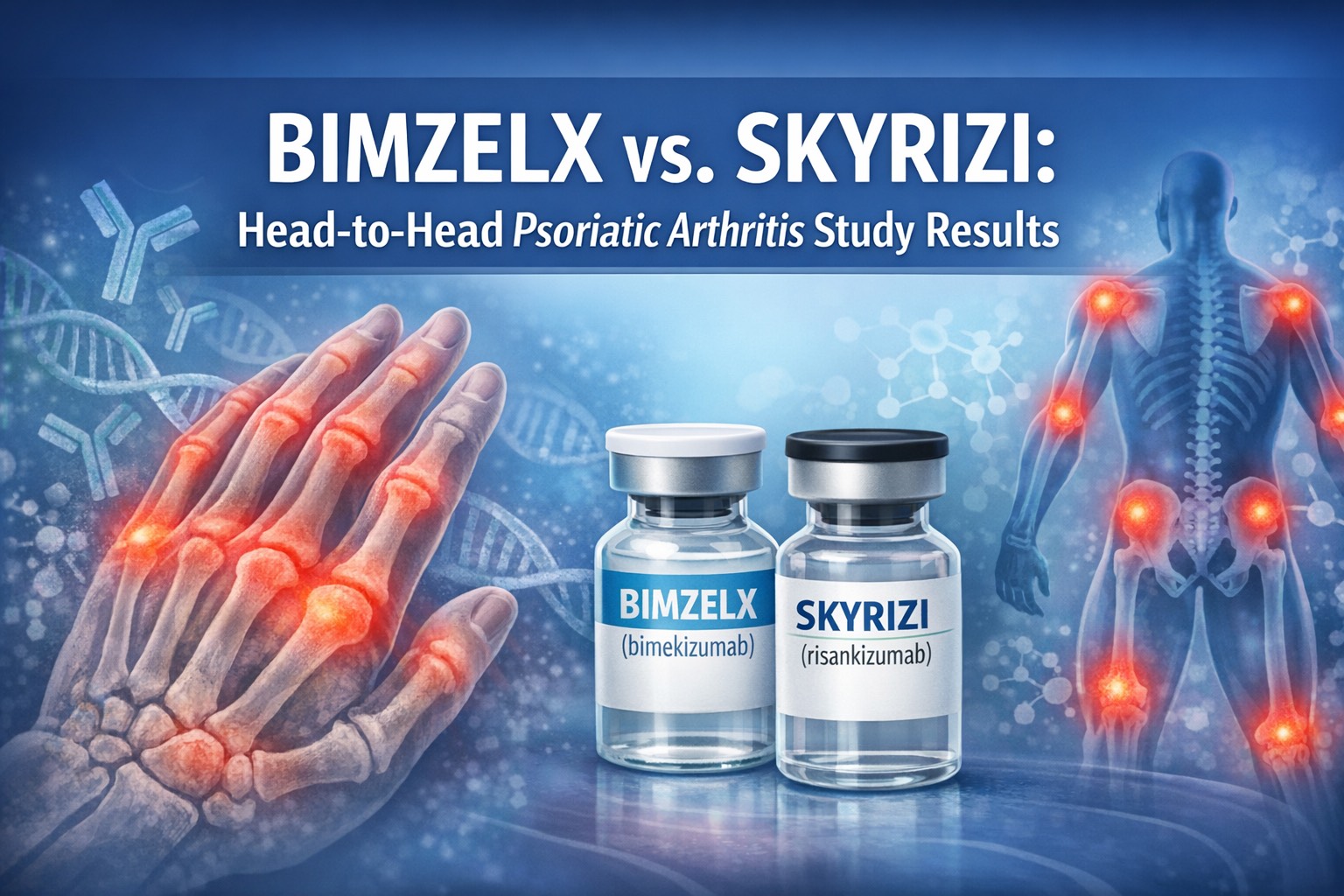
A new head‑to‑head study found that bimekizumab (brand name BIMZELX) produced better short‑term joint improvement than risankizumab (brand name SKYRIZI) in adults with active psoriatic arthritis (PsA). The trial’s primary measure was ACR50 – a commonly used, fairly strict standard that means a patient has achieved at least a 50% improvement in joint signs and symptoms.
What the BE BOLD study tested and why it matters
- Who was studied. BE BOLD enrolled adults with active psoriatic arthritis. The trial included people who were biologic‑naïve or had limited prior biologic exposure, reflecting a broad group of patients seen in clinics.
- What was compared. The study directly compared two approved biologic medicines: bimekizumab (which blocks both IL‑17A and IL‑17F) and risankizumab (which targets IL‑23). These drugs work on different parts of the immune system that drive PsA.
- Primary outcome. The main goal was the proportion of patients achieving ACR50 at Week 16 – a meaningful, joint‑focused measure that requires substantial improvement in tender and swollen joint counts plus other clinical measures. Meeting ACR50 is considered a robust sign that a treatment is controlling joint inflammation.
Why this is important: direct comparisons between biologics using joint outcomes are rare in PsA. BE BOLD is the first head‑to‑head study to show superiority of a licensed biologic over an IL‑23 inhibitor using a joint‑focused endpoint, which can help doctors and patients weigh options when choosing therapy.
Summary of the results
- Bimekizumab performed better on the main joint measure (ACR50) at Week 16. The company reported that a statistically greater share of people on bimekizumab reached ACR50 compared with those on risankizumab. That means more people had a large, clinically meaningful reduction in joint pain and swelling with bimekizumab in the early weeks of treatment.
- Safety so far. In the topline announcement, bimekizumab was generally well tolerated and no new safety signals were seen through Week 16. Full safety details will be available when the complete dataset is presented.
In this trial, more people taking BIMZELX had a strong improvement in their arthritis after about four months than people taking SKYRIZI, and no new short‑term safety concerns were reported in the topline release.
A quick comparison table
| Feature | BIMZELX (bimekizumab) | SKYRIZI (risankizumab) |
| Mechanism | Blocks IL‑17A and IL‑17F | Blocks IL‑23 |
| Primary BE BOLD result | Superior for ACR50 at Week 16 (statistically significant) | Comparator; did not meet superiority in ACR50 |
| Short‑term safety (to Week 16) | Generally well tolerated; no new signals reported | Safety profile consistent with known label (trial report) |
| Study type | Phase 3, randomized, double‑blind, active‑controlled | Active comparator in same trial |
How the two drugs differ biologically
- IL‑23 inhibitors (like risankizumab) reduce activity of a pathway that helps certain immune cells produce inflammatory signals, including IL‑17A and IL‑17F. This can be very effective, especially for skin disease.
- IL‑17A/IL‑17F inhibitors (like bimekizumab) block the inflammatory molecules IL‑17A and IL‑17F directly. Because IL‑17F can sometimes be produced independently of IL‑23, blocking both IL‑17A and IL‑17F may give broader control of inflammation in some patients, particularly for joint symptoms. The BE BOLD study was designed to test whether that theoretical advantage translates into better joint outcomes.
What to keep in mind when reading topline results
- Topline ≠ full dataset. A press release gives the main outcome but not all the details. Full results – including exact response rates, confidence intervals, subgroup analyses, and complete safety data – are usually presented at medical meetings or published in journals later.
- Short‑term vs long‑term. The primary result reported was at Week 16. Long‑term effectiveness and safety (months to years) are important for chronic conditions like PsA and will need full reporting and follow‑up.
- Individual response varies. Even if a drug shows superiority on average, some patients respond better to one medicine than another. Treatment choice should consider a person’s overall disease pattern (joints, skin, nails), other health conditions, prior treatments, and personal preferences.
What this might mean for people living with PsA
- More evidence to guide choices. Head‑to‑head trials help clinicians and patients compare options directly rather than relying on separate trials that enrolled different populations. BE BOLD adds a meaningful piece of evidence about joint outcomes.
- Not a one‑size‑fits‑all answer. Some people may prioritize skin clearance, others joint control, and some may weigh safety or dosing convenience more heavily. A doctor will consider the full clinical picture.
What to watch next
- Full data release. UCB has said it will submit the full BE BOLD results to an international congress and publish the complete dataset. That will include exact numbers, subgroup analyses, and more detailed safety information.
- Independent analyses and peer review. Once the full data are available in a peer‑reviewed journal or conference presentation, independent experts will evaluate the findings and place them in context with other studies.
Better Treatment, Lower Cost – No Catch.
Find safer, more effective medications with fewer side effects – often for less money. It’s fast, free, and personalized. Learn More →
Sources (3)
- UCB press release: BIMZELX (bimekizumab) superior to SKYRIZI (risankizumab) in BE BOLD.
https://www.ucb.com/newsroom/press-releases/article/bimzelxrvbimekizumab-superior-to-skyrizir-risankizumab-in-be-bold-first-head-to-head-study-in-active-psoriatic-arthritis-psa-to-demonstrate-superiority-in-acr50 - ClinicalTrials.gov record for BE BOLD – NCT06624228 (study design, enrollment, and status).
https://clinicaltrials.gov/study/NCT06624228 - Study design and rationale summary for BE BOLD (head‑to‑head rationale comparing IL‑17A/IL‑17F vs IL‑23 approaches).
Journal abstract and conference materials; see the Journal of the American Academy of Dermatology / related conference abstracts.