




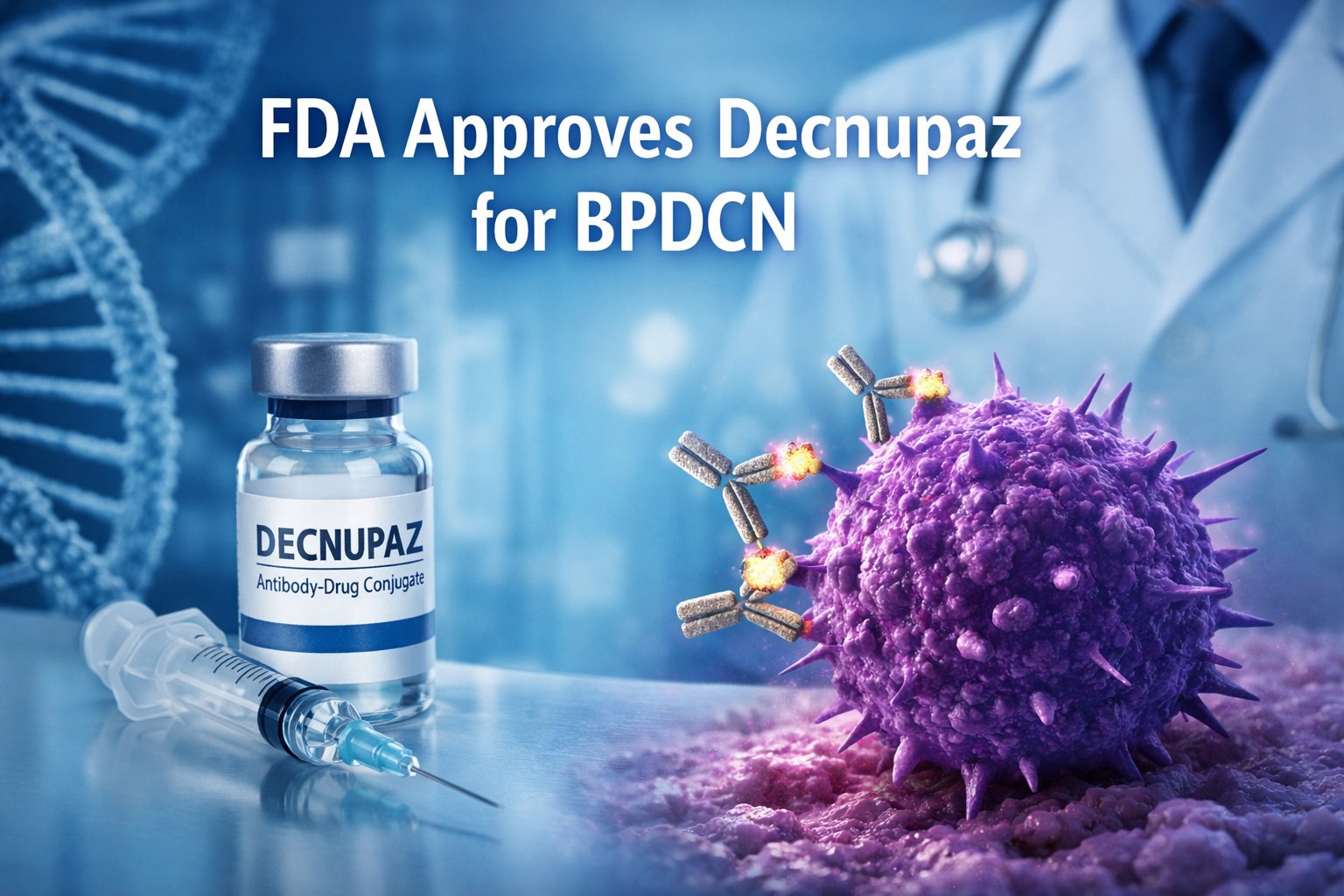
The U.S. Food and Drug Administration has approved Decnupaz (pivekimab sunirine-pvzy), marking a major step forward for people facing blastic plasmacytoid dendritic cell neoplasm, or BPDCN. This is an extremely rare and aggressive blood cancer that has historically offered patients very few effective treatment options. With this approval, adults diagnosed with BPDCN – whether newly diagnosed or facing a relapse – now have access to the first antibody-drug conjugate (ADC) specifically designed for this disease.
BPDCN is known for its rapid progression. Many patients first notice unusual skin lesions, but the cancer can quickly spread to the bone marrow, lymph nodes, and even the central nervous system. It most commonly affects older adults, particularly men in their 60s and 70s. Traditional treatment often involves intensive chemotherapy and sometimes stem cell transplantation, but relapse is common. That reality has made the need for new therapies especially urgent.
Decnupaz introduces a new type of targeted therapy into the BPDCN landscape. As an antibody-drug conjugate, it combines a laboratory-made antibody that seeks out cancer cells with a potent cancer-killing agent. This design allows the drug to attach to a protein called CD123, which is commonly found on BPDCN cells, and deliver treatment directly to them.
Why This Approval Matters
For the first time, patients with BPDCN have access to a treatment that can be started in an outpatient setting. This is a meaningful shift for people who may otherwise spend long periods in the hospital undergoing intensive therapies. Decnupaz is also the first and only ADC approved for BPDCN, giving patients a new option that works differently from chemotherapy.
Experts in leukemia have emphasized the importance of this milestone. According to specialists at MD Anderson Cancer Center, Decnupaz offers a meaningful benefit for patients who urgently need alternatives to existing treatments.
What the Clinical Trial Showed
The FDA based its approval on results from the CADENZA trial, a global Phase 1/2 study that evaluated Decnupaz in adults with BPDCN. The trial included two groups: patients who had never been treated before and those whose cancer had returned or stopped responding to previous treatments.
Key Findings from the CADENZA Trial
| Patient Group | Complete or Clinical Complete Remission Rate | Median Duration of Response |
| Newly diagnosed (33 patients) | 69.7% achieved remission | 9.7 months |
| Relapsed or refractory (51 patients) | 15.7% achieved remission | 9.2 months |
These results are significant for a cancer as rare and aggressive as BPDCN. Nearly 70% of newly diagnosed patients experienced remission, and some responses lasted well beyond the median duration. Even among patients whose cancer had returned or resisted prior treatment, Decnupaz still demonstrated measurable benefit.
Some patients in both groups were able to proceed to stem cell transplantation after treatment with Decnupaz, which can be an important next step for long-term disease control.
How Decnupaz Works
Decnupaz is a CD123-directed antibody-drug conjugate. In simple terms, it works like a guided missile:
- The antibody portion seeks out BPDCN cells by recognizing the CD123 protein on their surface.
- Once attached, it delivers a cell-killing agent directly into the cancer cell.
- This targeted approach aims to reduce damage to healthy cells while focusing treatment where it is needed most.
This mechanism is different from traditional chemotherapy, which circulates throughout the body and affects both healthy and cancerous cells.
Safety Information and Side Effects
While Decnupaz offers new hope, it also comes with important safety considerations. The FDA has issued a boxed warning – its strongest safety alert – due to the risk of severe liver toxicity, including a condition called hepatic veno-occlusive disease. This condition affects the small blood vessels in the liver and can be life-threatening.
Other warnings include:
- Infusion-related reactions
- Edema (swelling)
- Sulfite allergic reactions
- Embryo-fetal toxicity
These risks mean that patients receiving Decnupaz will need careful monitoring by their healthcare team.
How the Treatment Is Given
Decnupaz is administered intravenously at a dose of 0.045 mg per kilogram of body weight. Each infusion lasts about 15 to 30 minutes and is given once every three weeks. Treatment continues until the disease progresses or side effects become unacceptable.
Because it can be started in an outpatient setting, many patients may be able to receive treatment without being admitted to the hospital, which can improve quality of life during therapy.
What This Means for Patients
For people diagnosed with BPDCN, Decnupaz represents a long-awaited advancement. The disease has historically been difficult to treat, and relapse after chemotherapy is common. With this approval, patients now have access to a therapy that:
- Targets cancer cells more precisely
- Has shown strong remission rates in newly diagnosed patients
- Offers an option even for those whose cancer has returned
- Can be administered outside the hospital
This approval also reflects the FDA’s commitment to accelerating treatments for serious and rare conditions. Decnupaz received priority review, breakthrough therapy designation, and orphan drug designation – all programs designed to speed up the development of promising therapies.
Looking Ahead
The approval of Decnupaz is a meaningful step forward in the treatment of BPDCN. As more research continues, doctors and patients will gain a clearer understanding of how best to use this therapy, how long responses last, and how it fits into the broader treatment landscape.
For now, Decnupaz offers something that has been missing for far too long: a new, targeted option for a cancer that urgently needs better solutions.
Better Treatment, Lower Cost – No Catch.
Find safer, more effective medications with fewer side effects – often for less money. It’s fast, free, and personalized. Learn More →
Sources (2)
- AbbVie Press Release – FDA Approval of Decnupaz
https://news.abbvie.com/2026-05-27-U-S-FDA-Approves-DECNUPAZTM-pivekimab-sunirine-pvzy-for-Treatment-of-Adult-Patients-with-Blastic-Plasmacytoid-Dendritic-Cell-Neoplasm,-an-Ultra-Rare-and-Aggressive-Blood-Cancer-With-Limited-Treatment-Options - FDA Official Announcement – Approval of Pivekimab Sunirine-pvzy
https://www.fda.gov/drugs/resources-information-approved-drugs/fda-approves-pivekimab-sunirine-pvzy-blastic-plasmacytoid-dendritic-cell-neoplasm-ultra-rare