




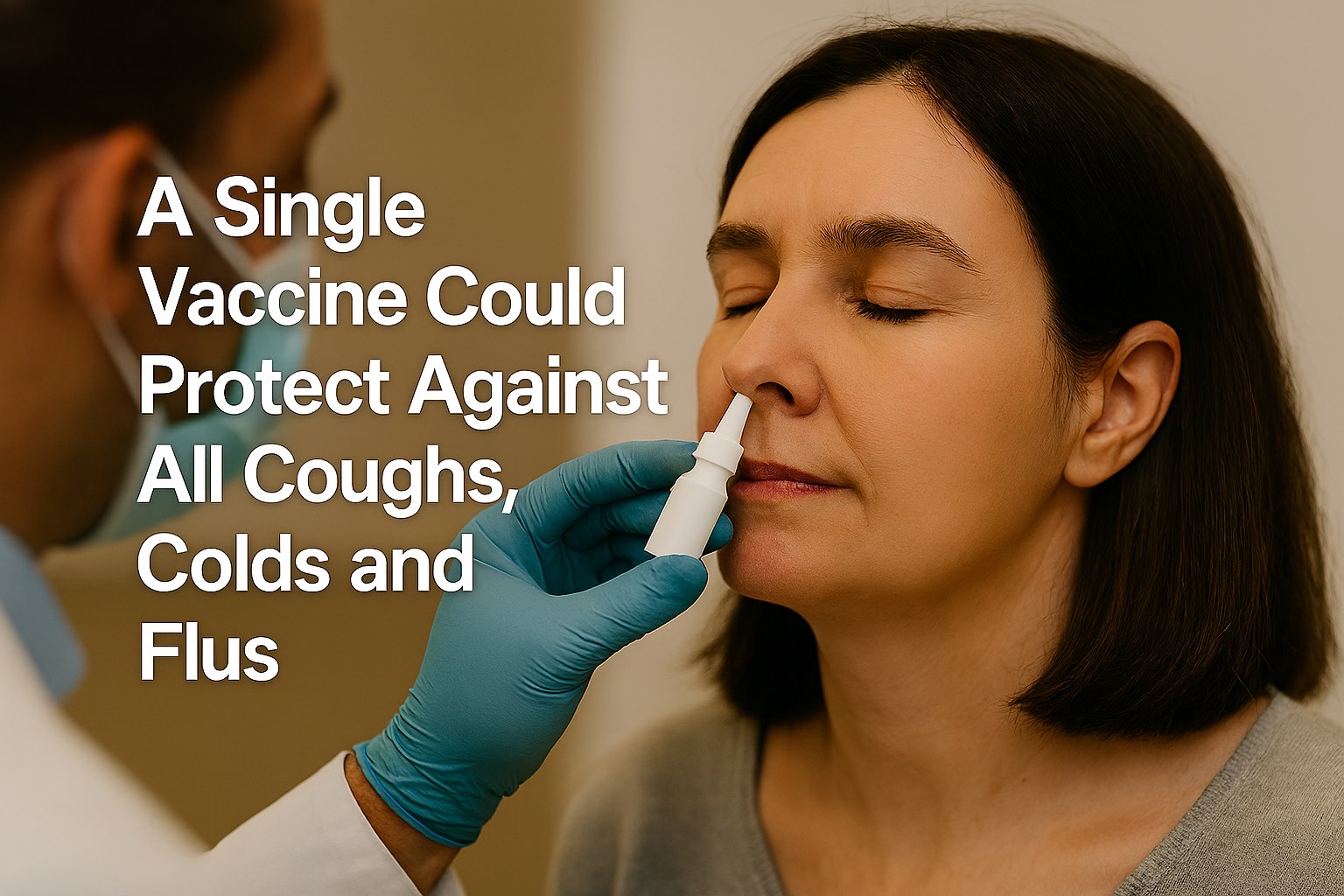
Imagine a single nasal spray that cuts your chances of catching the flu, COVID, the common cold, and even some bacterial lung infections – and that also calms allergic reactions that trigger asthma. That’s the bold idea behind a new line of research showing a nasal vaccine can supercharge the lungs’ frontline defenses, protecting mice against a wide range of respiratory threats for months. Early results are promising, but there are important limits and steps before anything like this reaches humans.
What makes this vaccine different from the ones we already know?
Most vaccines teach the immune system to recognize a specific virus or bacterium by showing it a piece of that germ (an antigen). That’s why flu shots are updated every year: the virus changes, and the vaccine has to match. The new approach doesn’t try to match every germ. Instead, it boosts the lungs’ innate defenses – the fast, general-purpose immune response that acts before the body builds a targeted antibody army. At the same time, it primes a small group of adaptive immune cells to keep that innate response active for months. The result is a two-part shield: a broad, immediate barrier plus a sustaining signal that keeps it ready.
Stop Overpaying for Meds.
Coupons aren’t your only option – see if safer, more effective, and lower-cost alternatives are available. It’s fast, personalized, and 100% free. Learn More →
What the experiments actually showed
Researchers gave mice a nasal vaccine made of three components: two molecules that trigger innate immune receptors, and a third ingredient that recruits T cells (part of the adaptive immune system) to keep the innate response switched on. Vaccinated mice were then exposed to several different threats:
- SARS‑CoV‑2 and other coronaviruses – vaccinated animals had much lower viral levels in the lungs and were protected from severe disease.
- Bacterial pathogens such as Staphylococcus aureus and Acinetobacter baumannii – the vaccine reduced bacterial infection in the lungs.
- Allergic triggers like house dust mites – vaccinated mice showed reduced allergic inflammation and fewer asthma-like symptoms.
Protection lasted for at least a few months in these animal tests, and a small number of doses (two or three) produced the effect in many experiments. These results are exciting because they suggest a single product could cover multiple seasonal threats and even offer a rapid first line of defense against a new pandemic virus.
How this works in plain language
Think of your lungs as a castle. Traditional vaccines train a small, specialized guard to recognize a particular enemy’s flag. The new nasal vaccine arms the castle’s sentries – the general guards who patrol the walls – and gives them a long-lasting alarm system so they stay alert. When an invader arrives, the sentries act quickly to slow or stop it, buying time for the specialized guards to arrive and finish the job. Because the sentries respond to many different invaders, the protection is broad rather than specific.
A quick comparison
| Feature | Traditional vaccines | Universal nasal vaccine (mouse studies) |
| Target | Specific antigen on one pathogen | Innate immune activation + sustaining T cell signal |
| Breadth | Narrow (one virus/bacterium) | Broad (multiple viruses, bacteria, allergens) |
| Delivery | Injection or nasal (varies) | Intranasal spray |
| Duration (in mice) | Months to years for specific immunity | Months of heightened lung protection reported |
| Stage of development | Many in human use | Preclinical (animal) studies; human trials needed |
Why a nasal spray matters
Delivering the vaccine through the nose targets the place where most respiratory infections start: the nasal passages and lungs. A local boost there can stop pathogens early, reduce transmission, and limit the inflammation that causes symptoms. Nasal delivery is also needle-free, which can improve uptake and make seasonal administration easier.
Realistic limits and why caution matters
Animal studies are an essential first step, but they don’t guarantee the same results in people. The immune systems of mice and humans differ in important ways, and what’s safe and effective in animals can fail in human trials. Key challenges include:
- Safety: Activating the innate immune system broadly could cause unwanted inflammation in some people, especially those with autoimmune conditions or severe allergies. Careful safety testing is essential.
- Duration and dosing: How long protection lasts in humans and how many doses are needed remain unknown.
- Population differences: Older adults, young children, and people with chronic lung disease may respond differently. Trials must include diverse groups.
Regulatory agencies require stepwise human trials – first to check safety in a small group, then to test effectiveness in larger populations – before any product can be approved. That process can take years.
Where this fits into broader vaccine research
The idea of a universal or broadly protective vaccine isn’t new. Scientists have pursued universal flu vaccines and broader coronavirus vaccines for years. What’s novel here is the strategy of linking innate and adaptive immunity in the lungs to create a durable, general-purpose defense. Government programs and research groups are also investing in next-generation platforms that aim for broader protection against pandemic-prone viruses, showing this is a high priority for public health.
What this could mean for you and public health
If the approach proves safe and effective in humans, the practical benefits could be substantial:
- Fewer seasonal shots: One nasal spray might replace multiple vaccines each year.
- Faster response to new threats: A broadly protective product could blunt the early spread of a novel respiratory virus while specific vaccines are developed.
- Reduced hospitalizations: By lowering severe infections from viruses and bacteria, the vaccine could ease pressure on hospitals during winter surges.
But these benefits depend on successful human trials, manufacturing scale-up, and careful monitoring for rare side effects.
What to watch next
Researchers will need to move from mice to human trials. Early-phase clinical trials will focus on safety and immune responses in healthy volunteers. If those go well, larger trials will test whether the vaccine actually prevents illness in real-world conditions. Government agencies and academic centers are already prioritizing universal vaccine platforms, so funding and trial infrastructure are likely to follow.
Takeaway
A nasal vaccine that boosts the lungs’ general defenses is a promising idea that could one day protect people against many respiratory threats with a single spray. The mouse data are striking, but human trials are the crucial next step. Until then, established vaccines and public-health measures remain the best tools we have to reduce the risk of severe respiratory illness. Consult your healthcare provider about current vaccines and what’s right for you.
Better Treatment, Lower Cost – No Catch.
Find safer, more effective medications with fewer side effects – often for less money. It’s fast, free, and personalized. Learn More →
Sources (5)
- Science (original study DOI) – Pulendran et al., experimental universal nasal vaccine (mouse study). https://www.science.org/doi/10.1126/science.aea1260
- Stanford Medicine / ScienceDaily – “Scientists create universal nasal spray vaccine that protects against COVID, flu, and pneumonia.” https://www.sciencedaily.com/releases/2026/02/260222092258.htm
- Nature – “‘Universal vaccine’ protects mice against multiple pathogens.” https://www.nature.com/articles/d41586-026-00506-y
- HHS / NIH announcement – “HHS, NIH Launch Next-Generation Universal Vaccine Platform for Pandemic-Prone Viruses.” https://www.nih.gov/news-events/news-releases/hhs-nih-launch-next-generation-universal-vaccine-platform-pandemic-prone-viruses
- ScienceAlert – “Universal Vaccine Blocks Viruses, Bacteria, And Allergies With a Nasal Spray.” https://www.sciencealert.com/universal-vaccine-blocks-viruses-bacteria-and-allergies-with-a-nasal-spray