




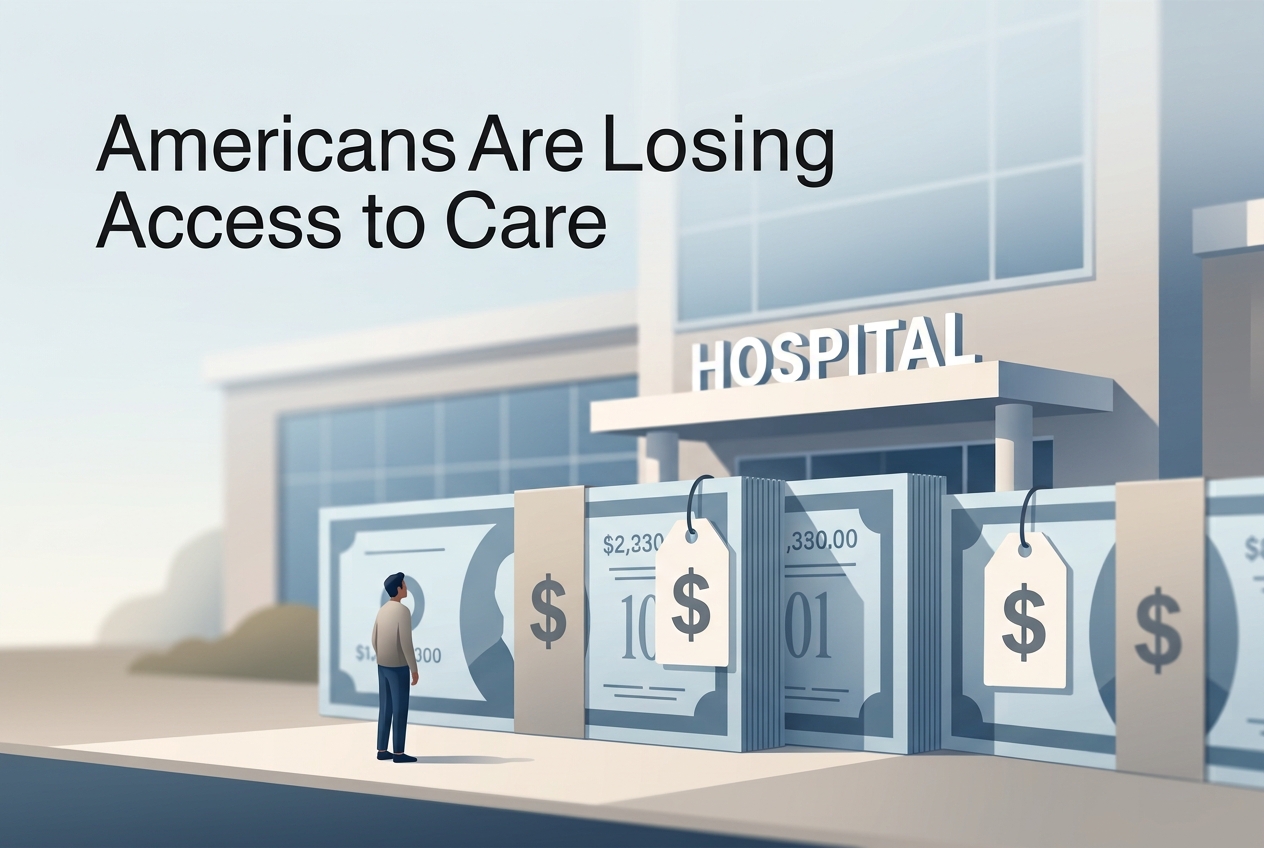
For the first time in half a decade, fewer than half of American adults say they can consistently afford the health care they need. This shift is not a small dip or a one‑year anomaly. It reflects a steady decline in affordability that has been building since 2021, and the newest data shows the problem is accelerating. Millions of people are being priced out of basic medical care, prescription drugs, and routine visits that keep them healthy.
This trend matters because health care is not a luxury. When people cannot afford treatment, they delay care, skip medications, or avoid the doctor entirely. Over time, small health issues become big ones, and big ones become life‑threatening. Understanding what is driving this affordability crisis helps explain why so many Americans are struggling and what it means for the future of health care in the United States.
The Numbers Behind the Decline
Recent research from the West Health‑Gallup Center on Healthcare in America paints a clear picture: only 49 percent of U.S. adults are considered “cost secure” in 2025, meaning they can reliably afford the care and medications they need. This is the lowest level recorded since the index began in 2021.
The index sorts Americans into three groups based on their ability to pay for care:
- Cost secure: People who can access quality, affordable care and have recently been able to pay for both medical visits and prescriptions.
- Cost insecure: People who either lack access to affordable care or have recently been unable to pay for needed care or medicine.
- Cost desperate: People who lack access to affordable care and have recently been unable to pay for both care and prescriptions.
In 2025, the breakdown looks like this:
| Category | Share of U.S. Adults |
| Cost secure | 49 percent |
| Cost insecure | 41 percent |
| Cost desperate | 10 percent |
These numbers come from nationally representative surveys of more than 5,600 adults conducted between October and December 2025.
What makes the decline even more concerning is how quickly it is happening. Between 2024 and 2025 alone, an estimated 2.8 million Americans fell out of the cost secure category.
Why Affordability Is Getting Worse
Health care costs in the United States have been rising for years, but the pace has recently accelerated. According to the latest data, total U.S. health care spending reached $5.3 trillion in 2024, a 7.2 percent increase from the previous year. That growth rate is more than double the overall inflation rate of 2.9 percent.
Several major cost drivers stand out:
Rising hospital prices
Hospital prices climbed 3.4 percent in 2024, the fastest increase since 2007. When hospital care becomes more expensive, everything from emergency visits to routine procedures becomes harder to afford.
Higher prescription drug spending
Prescription drug spending rose 7.9 percent in 2024. For many Americans, medications are not optional. When prices rise, people often cut pills in half, skip doses, or stop taking their prescriptions entirely.
Insurance premiums and out‑of‑pocket costs
Insurance premiums continue to rise, and many plans now come with high deductibles. Even people with insurance often face large bills before their coverage kicks in. As a result, having insurance no longer guarantees affordable care.
These rising costs are outpacing wage growth, leaving millions unable to keep up.
Who Is Struggling the Most
The affordability crisis does not affect everyone equally. The data shows clear patterns across race, income, and age.
Racial disparities
Only 38 percent of Black adults and 32 percent of Hispanic adults are considered cost secure, compared with 55 percent of White adults. These gaps have widened since 2021, with cost security dropping more sharply among Black and Hispanic adults than among White adults.
Income is not a shield
While lower‑income households are most likely to struggle, affordability problems now reach well into the middle and upper‑middle class.
- 53 percent of people earning $48,000 to $89,999 per year are cost insecure or cost desperate.
- 43 percent of those earning $90,000 to $119,999 fall into the same categories.
Even among households earning $120,000 to $179,999, one‑third are not cost secure. And among households earning $180,000 or more, one in five still cannot consistently afford health care.
Younger adults are hit hardest
Adults aged 18 to 29 have seen the steepest decline in cost security. In 2021, 46 percent of young adults were cost secure. By 2025, that number had fallen to just 32 percent.
This is especially troubling because younger adults typically have fewer chronic conditions and lower health care needs. If they are already struggling, the long‑term outlook is even more concerning.
Older adults are not immune
Adults 65 and older tend to be more cost secure because of Medicare, but even this group has seen a decline. Cost security among older adults dropped from 73 percent in 2021 to 61 percent in 2025.
How This Affects Everyday Life
When people cannot afford health care, the consequences show up in many ways:
Delayed or skipped care
People often wait until symptoms become severe before seeking help. This leads to worse outcomes and higher costs later.
Medication non‑adherence
High drug prices cause many to ration or skip medications, which can worsen chronic conditions like diabetes, hypertension, and asthma.
Financial stress
Medical bills are a leading cause of financial strain. Even small unexpected expenses can push families into debt.
Reduced productivity
When people are sick and untreated, they miss work or struggle to perform their jobs. This affects employers, the economy, and overall well‑being.
Why This Trend Matters Now
The latest findings reflect conditions before the expiration of enhanced Affordable Care Act subsidies. These subsidies helped lower insurance costs for millions of Americans. Without them, affordability may worsen further.
Experts warn that without meaningful reforms, the situation will continue to deteriorate. Tim Lash, president of the West Health Policy Center, put it plainly: rising costs are outpacing Americans’ ability to pay, and millions are being priced out of the system.
What Could Help Reverse the Trend
While the report focuses on the problem rather than solutions, several areas stand out as potential levers for improvement:
Lowering prescription drug prices
Policies that allow Medicare to negotiate drug prices or cap out‑of‑pocket costs could make medications more affordable.
Increasing price transparency
When patients know the cost of care upfront, they can make more informed decisions and avoid surprise bills.
Expanding access to preventive care
Preventive services help catch problems early, reducing long‑term costs for both patients and the health system.
Strengthening insurance protections
Limiting high deductibles and improving coverage could help ensure that having insurance actually means being able to afford care.
A Growing Warning Sign
The steady decline in health care affordability is more than a statistic. It is a warning sign that the system is becoming unsustainable for millions of Americans. When fewer than half of adults can reliably afford care, the consequences ripple through families, workplaces, and communities.
The data shows that this is not a temporary dip. It is a long‑term trend that has worsened every year since 2021. Without action, the number of people who cannot afford care will continue to grow, deepening disparities and putting more Americans at risk.
Better Treatment, Lower Cost – No Catch.
Find safer, more effective medications with fewer side effects – often for less money. It’s fast, free, and personalized. Learn More →
Sources (3)
- Oncology Nurse Advisor: Proportion of Americans Who Can Consistently Afford Health Care at 5‑Year Low
https://www.oncologynurseadvisor.com/news/proportion-of-americans-who-can-consistently-afford-health-care-at-5-year-low/
- U.S. News & World Report: Americans Struggle to Afford Quality Healthcare
https://www.usnews.com/news/health-news/articles/2026-06-18/americans-struggle-to-afford-quality-healthcare-poll - West Health: Americans’ Ability to Afford Healthcare Falls to Five‑Year Low
https://westhealth.org/news/americans-ability-to-afford-healthcare-falls-to-five-year-low/