




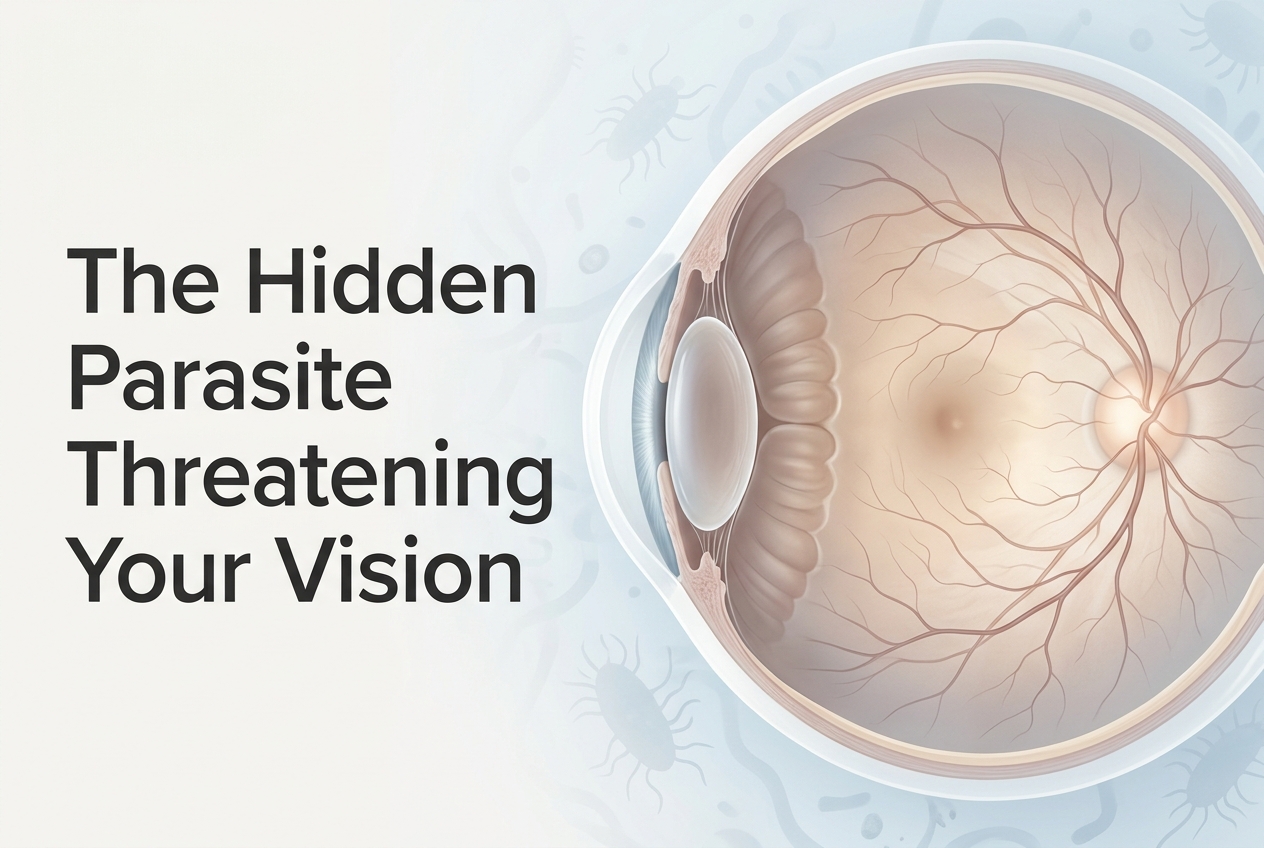
Most people have never heard of Toxoplasma gondii, yet this microscopic parasite has quietly infected an enormous portion of the global population. Depending on where you live, anywhere from 25 percent to more than 60 percent of people carry it. In some regions, the infection rate is even higher. Many people never feel sick, never notice symptoms, and never realize they have it. But for some, especially those with weakened immune systems or certain risk factors, this parasite can cause serious complications – including a dangerous eye condition called toxoplasmosis retinitis.
This post breaks down what this parasite is, how so many people become infected, why it can damage the retina, and what you can do to protect yourself. The goal is to make the science easy to understand without watering down the important details.
What Exactly Is Toxoplasma gondii?
Toxoplasma gondii is a single-celled parasite that infects warm-blooded animals, including humans. Cats are its primary host, meaning the parasite completes its life cycle inside cats. But humans and many other animals can become infected as intermediate hosts.
The parasite has several forms:
- Oocysts – shed in cat feces and found in soil, sandboxes, and contaminated water
- Tachyzoites – the active, fast-moving form that spreads through the body
- Tissue cysts – the dormant form that can stay in muscles, the brain, and the eyes for life
Once inside the human body, the parasite can travel to many organs. In healthy people, the immune system usually keeps it under control, and the infection becomes dormant. But dormant does not mean gone. The parasite can reactivate later, especially if the immune system weakens.
How Common Is This Parasite?
The numbers are surprisingly high. Globally, about 25 percent to 30 percent of people are infected. In some regions, the rate is even higher:
- 10 to 30 percent in North America, Southeast Asia, and Northern Europe
- 30 to 50 percent in Central and Southern Europe
- More than 60 percent in parts of Latin America and tropical countries
In the United States alone, over 40 million people carry the parasite.
These numbers vary because climate, cat populations, food habits, and sanitation all influence how easily the parasite spreads.
How Do People Get Infected?
Most infections come from everyday activities. You do not need to touch a cat to get toxoplasmosis. Common routes include:
- Eating undercooked meat (especially pork, lamb, venison, or ground beef)
- Consuming unwashed fruits or vegetables contaminated with soil
- Drinking untreated water
- Handling cat litter or soil contaminated with cat feces
- Using kitchen tools that touched raw meat and were not washed properly
- Rarely, receiving infected blood or an organ transplant
- Transmission from mother to baby during pregnancy
Because cats can shed millions of parasites in their feces, even a small amount of contaminated soil can spread infection.
Why Most People Never Know They Have It
For healthy individuals, toxoplasmosis is usually silent. Many never develop symptoms. When symptoms do appear, they often resemble a mild flu:
- Fever
- Swollen lymph nodes
- Headache
- Muscle aches
- Fatigue
These symptoms typically resolve on their own. Because they are so nonspecific, most people never connect them to a parasite.
When Toxoplasmosis Becomes Dangerous
The parasite becomes a serious threat when the immune system cannot keep it dormant. People at higher risk include:
- Individuals with HIV or AIDS
- People undergoing chemotherapy
- Organ transplant recipients
- People taking high-dose steroids
- Infants infected during pregnancy
In these cases, the parasite can reactivate and spread rapidly, causing severe disease in the brain, lungs, or eyes.
The Eye Complication You Should Know About: Toxoplasmosis Retinitis
One of the most serious complications of toxoplasmosis is ocular toxoplasmosis, a form of retinitis. This happens when the parasite infects the retina – the light-sensitive tissue at the back of the eye.
Ocular toxoplasmosis is actually the leading cause of infectious retinochoroiditis worldwide. It can occur in people with healthy immune systems, but it is more severe in those with weakened immunity.
Symptoms of toxoplasmosis retinitis include:
- Blurred or decreased vision
- Eye pain
- Floaters (specks drifting in your vision)
- Sensitivity to light
- Hazy vision due to inflammation inside the eye
If untreated, the infection can cause permanent retinal scarring and even blindness.
How the Parasite Damages the Retina
When Toxoplasma gondii reaches the eye, it can infect the retina and the choroid (the layer beneath the retina). The active form of the parasite causes necrotizing retinitis – meaning it destroys retinal tissue.
The body responds with inflammation, which can make vision hazy. As the infection heals, scar tissue forms. These scars can disrupt vision permanently. In congenital cases, children may not show symptoms until adolescence or adulthood, when old scars begin to reactivate.
How Common Is Ocular Toxoplasmosis?
Rates vary widely by region:
- About 2 percent of toxoplasmosis cases in the United States involve the eyes
- Around 18 percent in Brazil
- Up to 43 percent in parts of Africa
These differences reflect environmental conditions, cat populations, and genetic factors.
Who Is Most at Risk for Eye Damage?
While anyone infected with Toxoplasma gondii can develop ocular disease, certain groups face higher risk:
- People with weakened immune systems
- Infants infected during pregnancy
- Individuals living in regions with high parasite loads
- People exposed to contaminated soil or raw meat frequently
- Cat owners with multiple cats or kittens
- Individuals who eat raw or undercooked meat regularly
Can Toxoplasmosis Retinitis Come Back?
Yes. Recurrence is common. The parasite can remain dormant in retinal tissue for years. If it reactivates, new lesions can form near old scars. Each recurrence increases the risk of vision loss.
A large systematic review found that ocular toxoplasmosis is a recurrent disease that can lead to visual impairment and blindness, especially when lesions occur near the central retina.
How Doctors Diagnose It
Diagnosis usually involves:
- A detailed eye exam
- Retinal imaging
- Blood tests for Toxoplasma antibodies
- Sometimes PCR testing for parasite DNA in special cases
Eye doctors can often identify the characteristic appearance of toxoplasmosis lesions.
Treatment Options
Not everyone with toxoplasmosis needs treatment. But ocular toxoplasmosis usually requires medication, especially if vision is threatened.
Common treatments include:
- Pyrimethamine
- Sulfadiazine
- Corticosteroids
- Clindamycin
- Azithromycin
Treatment aims to stop active infection and reduce inflammation. Scars cannot be reversed, so early treatment is important.
How to Protect Yourself
You can significantly reduce your risk of infection or reactivation by taking simple precautions:
Food safety
- Cook meat thoroughly
- Wash fruits and vegetables
- Avoid raw shellfish
- Clean kitchen tools after preparing raw meat
Cat-related precautions
- Have someone else change the litter box if possible
- Wear gloves when gardening
- Keep cats indoors and feed them commercial cat food
- Avoid adopting new cats during pregnancy
General hygiene
- Wash hands after handling soil, sand, or raw meat
- Avoid untreated water
When to Seek Medical Care
You should contact a healthcare professional if you experience:
- Sudden blurred vision
- Eye pain
- Floaters
- Sensitivity to light
- Confusion or neurological symptoms
- Symptoms during pregnancy or if you are immunocompromised
Prompt treatment can prevent long-term damage.
Better Treatment, Lower Cost – No Catch.
Find safer, more effective medications with fewer side effects – often for less money. It’s fast, free, and personalized. Learn More →
Sources (7)
- https://www.cdc.gov/parasites/toxoplasmosis/epi.html
- https://www.cdc.gov/dpdx/toxoplasmosis/index.html
- https://www.aao.org/eyenet/article/ocular-toxoplasmosis-refresher
- https://www.mayoclinic.org/diseases-conditions/toxoplasmosis/symptoms-causes/syc-20356249
- https://www.cdc.gov/parasites/toxoplasmosis/index.html
- https://www.getasecondopinion.ai/condition/toxoplasmosis
- https://www.ncbi.nlm.nih.gov/pmc/articles/PMC10069780/